Lets Make Wyoming a State Again
Democrats and Republicans alike in Wyoming Territory agreed by the late 1880s that it was time their territory became a state. Statehood was bonny to the territory's businessmen and politicians, as it offered them much more local control over land and h2o issues. Statehood would too mean the federal government would no longer pay the salaries of the superlative officials — just that savings mattered less as time went on.
One big obstruction loomed, however: were there enough people? Population had grown but slowly since the Territory was established in 1869. Congress used a general rule of thumb, dating back before the U.S. Constitution to the Northwest Ordinance, that a territory had to show a population of 60,000 people to qualify for statehood. Territorial Gov. Thomas Moonlight, a Democrat, reported in December 1888 that Wyoming had only 55,500 people.
Nigh people lived on ranches and in small towns. The major employers, however, were the railroads (by 1890, these were the Union Pacific, the Chicago, Burlington and Quincy and the Chicago and Northwestern) and the coal mines (many owned by the railroads). Merely the population remained small and scattered over the territory's 98,000 square miles.
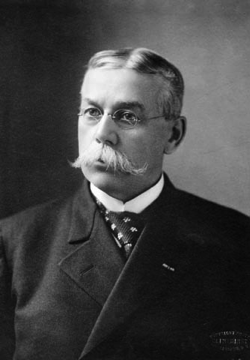 Cheyenne businessman and rancher Francis Eastward. Warren, was appointed to a second stint as territorial governor in 1889, replacing Moonlight. Warren strongly supported statehood. The just officer elected territory-wide, Delegate to Congress Joseph M. Carey, likewise backed statehood. (Territorial governors and other top officials were appointed by the president. Territorial delegates to Congress could introduce legislation, but could not vote.) Carey argued that it was non unprecedented for territories with fewer than threescore,000 people to exist granted statehood. Warren, Carey and the others knew that, though Wyoming's 20-year-old experiment with votes for women would be controversial when the statehood question reached Congress, the population issue was more likely to cause problems.
When Congress did not act on Carey's proposal for calling a Wyoming constitutional convention in 1889, presumably because of questions of population, Warren went ahead and set a date anyway for the election of delegates to a constitutional convention in Cheyenne. The election was called for July viii, 1889. Though women had full voting rights and rights to seek and hold office, not one ran for a delegate slot. The future state that had prided itself for being the first authorities to grant women equal political rights was to have a country constitution that was drafted, debated and passed entirely by men.
Constitutional Convention
Xl-nine of the 55 elected members assembled in Cheyenne in September 1889 to draft the Constitution. Four of the 49 did not sign the Constitution and attended just occasionally. Of those who did nourish, 31 were Republicans and 18 were Democrats.
Warren emphasized the necessity for haste. In order for Wyoming'south asking to be considered past Congress along with admission requests from neighboring states, a Wyoming statehood proposal would have to be introduced earlier the Congress concluded its current session. That meant Wyoming citizens would have to vote on the Constitution at the November general election. Warren wanted their piece of work done past the end of September—but 25 working days away.
Knowing their time was short, the delegates assembled a "scissors-and-paste" recapitulation of sections pulled from many other states. There were two major exceptions to that procedure, however—h2o and irrigation, and women's rights.
Executive and judicial branches
Specially in fiscal matters, the delegates reflected the 19th century distrust of legislative power, and many of the 37 sections in the Declaration of Rights article too limited legislative power.
Besides, the constitution explicitly states that the "executive power" of the state "shall be vested" in the governor, who "shall take care that the laws exist faithfully executed." These seemingly broad powers, nevertheless, were express. Most notable was cosmos of numerous boards, fabricated up of the governor interim with the other four statewide elected officials, to administer many important state functions. (Other states had already adopted like systems.) The constitution also provided that appointments to some other boards of citizen volunteers be made for terms longer than the governor's. University of Wyoming trustees, for example, are appointed for six-twelvemonth terms. The Constitution also allowed various boards and commissions to govern specific state agencies and even appoint the directors, taking that appointment power out of the governor'south easily. Only government reorganization in the 1990s, more than 100 years afterward, finally fabricated many of these formerly governing boards advisory only.
The Constitution provided for a four-year term for the governor with no restrictions on the number of terms a governor could serve. The legislature would need a 2/3 vote to override a gubernatorial veto. During the 16th day of the convention, consul A. C. Campbell introduced an amendment attempting to make an override require only a simple bulk, but his proposal failed.
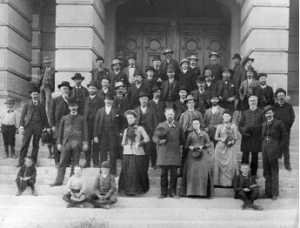 Some of the main debates were over what levels of population and assessed valuation should be sufficient to institute new counties. Some delegates argued it ought to be easy to create new counties, so that people wouldn't have to travel nifty distances to practice business at county seats. Others, nonetheless, saw danger in assuasive new county formation too hands. New counties could drain off essential resources from older, established ones. Delegates compromised, allowing a relatively depression threshold for county formation, simply with the requirement that the old canton from which the new one was carved would have to meet a specific threshold for assessed valuation, so that it would accept sufficient financial resources to keep functioning.
On the very eve of adjournment, the question of county officers' salaries consumed the session. Some delegates believed county officials would be more than diligent if their pay was gained from a per centum of tax collected, from fees or other similar measure. The majority, yet, favored salaries, set by the legislature.
Sorting out the judicial branch, delegates debated whether or non to have a supreme courtroom split from commune courts. The iii territorial justices "rode excursion" individually, sitting as trial judges and returning to Cheyenne to hear appeals equally the supreme court. Many delegates, peculiarly non-lawyers, believed making two separate courts would be wasteful. In the opinion of several delegates, the district judges would carry virtually of the work while the Supreme Courtroom justices would exist left with piffling to do. Lawyers, nevertheless, favored separate courts and managed to defeat an effort to retain the territorial organization, but barely — 21 to 17.
Judges at all levels were to be elected to their offices. In 1972, the Constitution was amended to change that system dramatically, when the state adopted the "Missouri plan" of pick. A judicial nominating commission at present accepts applications from Wyoming lawyers who accept an involvement in serving every bit a judge. The committee selects iii names and forwards the names to the governor who then selects one to serve on the court until the next general election, when voters are given the choice of voting to retain or not retain the gauge for the unabridged term.
Legislative branch
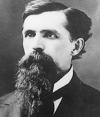 Legislative circulation as well consumed substantial delegate debate. The disagreements came with apportionment in the Senate. Delegates from the older established counties, along the southern tier on the main line of the Wedlock Pacific Railroad, fought efforts by delegates from the smaller northern counties to follow a plan like the U.Due south. Constitution's, with each county given an equal number of senators. Delegates from the Wedlock Pacific-dominated southern Wyoming counties, led past Charles Potter and E. Southward. Northward. Morgan, both from Cheyenne, argued that the federal analogy was flawed. Counties have no independence; they are creations of the land — non at all like u.s.' relationship to the federal regime. George Baxter, also from Cheyenne, pointed out that it would be every bit unfair to give each county a senator as it would exist to need that each county give the aforementioned contribution to the state's general fund.
If delegates from the southern counties had been uniformly in agreement, the issue would have been settled very rapidly. But former Territorial Gov. John Hoyt and Thou. C. Brown, the president of the Constitutional Convention, bankrupt with their southern colleagues. Both argued that a smaller Senate, constructed along federal lines, could serve as a check on the popular will in the lower business firm. Brown called the idea "the happiest compromise that ever came to human."
All along, the delegates opted for apportionment in the House to be based on population. Elections were to be at large in each canton. Even the least populated county, therefore, would accept at to the lowest degree one representative. (Non until the legislative reapportionment afterward the 1990 demography — and a legal challenge — were legislators in Wyoming elected from unmarried-member districts). On the 19th twenty-four hours of deliberations, the convention rejected the federal illustration past allocating more than one senator to more populous counties. The delegates, even so, gave a sop to several northern counties in the form of one additional House member each. While the more populous counties gained greater representation in the Senate, arguably, a modified "federal" plan prevailed because at to the lowest degree one senator still was granted to each canton — even to the least populated one.
The delegates seemed comfortable with retaining women's suffrage by incorporating it into a provision of the Constitution, which flatly stated that equality would exist without reference to gender. For the majority of delegates, more than specific language was non needed. The delegates did argue, however, about including literacy as a requirement for voting. One member argued that if a voter had to read in order to vote, almost newcomers would exist able to vote while old established ranchers, many of them war veterans who had been voting for many years, would be stripped of their voting rights. The entire article, incorporating equal rights and the much more debated requirement for literacy, passed by a vote of 30-12. Only one delegate, Louis J. Palmer, an Illinois-born lawyer and Democrat from Sweetwater Canton, flatly stated opposition to women's suffrage.
Coal
In the article on mining, however, women were barred from mining coal, afterwards considerable contend. Finally, Alexander Sutherland, a Canadian-born Big Horn Basin rancher, noted that he had seen women working in the mines in Pennsylvania and said, "I hope nosotros shall never see that in Wyoming." Women were constitutionally barred from coal mining until 1978.
Convention President Yard. C. Brown introduced an article that would take established a coal tonnage revenue enhancement. Brown pointed out that the coal industry was making substantial profits as the companies (primary the Union Pacific Coal Company) removed more and more coal from the territory. Picayune of the coal was used within the borders of Wyoming. Brown argued that the state would be financially sound for years to come up if a minor taxation were assessed confronting every ton of coal shipped out of Wyoming. "Can they afford to pay out of that 75 cents [of clear profit] 2 and a half cents per ton?" he asked.
The measure out passed initially. But soon afterwards, C. D. Clark, a delegate from Uinta County and a lawyer for the Union Pacific, argued that if the state got revenues from every ton of coal mined, the result would be regime waste product, inefficiency and corruption. It would be preferable to keep government lean and honest, which could only be done, he said, if the tax on coal were not made office of the Constitution. The delegates reversed their before decision. Wyoming finally adopted a severance revenue enhancement on coal, similar to Brownish's proposal, in 1969.
Revolutionary h2o law
While tax of coal would have forever changed state funding, Wyoming's Article VIII, involving h2o and irrigation, was revolutionary. The constitution gear up up a complete system of h2o allocation, unique amidst states to that time, and firmly established the principle of country buying of the resource.
Because of the declaration that the state owned all waters within its borders, the state could intervene every bit to issues of water. The virtually important figure in drafting the h2o and irrigation article was Dr. Elwood Mead, the territorial engineer with substantial experience in administering Wyoming'southward territorial h2o laws also every bit the laws in Colorado. Frustrated by endless court adjudications of h2o rights in Colorado, Mead advocated directing such controversies to the deliberations a group of individuals with real expertise in the subject — a state engineer and a board of control, fabricated upwardly of one superintendent for each of the land'due south four main drainages — the Green, Platte, Wind/Bighorn, and Pulverisation rivers. The engineer was president of the board; the lath'south main chore was to protect both private and state interests in water. The Constitution too set along the principle that "beneficial use" determined the ameliorate water right, and no cribbing could be denied unless "demanded past the public interest."
Debates were long over questions of water and irrigation. And halfway through the convention, delegates adjourned for an entire afternoon to run across with the visiting U. S. Senate Committee on Arid Lands. Similarly the entire morning session of the 18th 24-hour interval involved a lengthy fence over the definition of "appropriation."
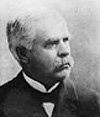 Two delegates were credited with the water article — J. A. Johnston, a Laramie County farmer (and managing director of the biggest irrigation venture in the land, the Wyoming Development Visitor, in which both Warren and Carey had invested), and Charles H. Burritt, a Johnson Canton lawyer. Prominent as well was Territorial Engineer Mead, who was non a convention delegate but nonetheless played a strong advocacy role backside the scenes. Mead advocated adoption of the prior appropriation doctrine (already in performance, to some extent, in California and in Colorado where he had formerly served as assistant water engineer). During his term every bit territorial engineer, he had traveled throughout the territory urging support for his system as a ways of fair allocation for everyone. Asbury B. Conaway, a former territorial court justice serving every bit a delegate from Sweetwater Canton, questioned if the Mead-inspired article changed the mutual law rule about riparian rights — that is, uncomplicated streamside rights — to h2o. Johnston and Charles Potter agreed information technology did. The residuum of the delegates approved.
While prior cribbing and authoritative control by experts seemed reasonable, more than revolutionary was state ownership of all waters within the state, a move that continues to intrigue modern historians. Early in the argue, M. C. Dark-brown pointed out that without country ownership, prior appropriators would not be subject area to the Constitution. "It would exist utterly impossible for the legislature, or any power of the state, to command, regulate, or in any mode interfere with its utilise." He concluded that "It is just by the declaration that we are to exist the accented owners of all the water that nosotros may be enabled to command unreservedly the uses to which it may exist put."
Afterwards in the debates, Sheridan County Democrat Henry A. Coffeen questioned if the h2o appropriation was a move to enrich corporations. Republican Charles Burritt from neighboring Johnson County took outcome with the insinuation. Such a connection "exists only in the very fertile imagination of the gentleman from Sheridan," Burritt said.
Contrary to Coffeen's suspicions, historian Don Pisani argues that the lack of big mining interests, the relatively aplenty supply of unappropriated water and the absenteeism of large groups of farmers fabricated the Wyoming article possible. Other historians argue that the water article came from the "cattle kings — early arrivals and primeval users of h2o who were confident such prior cribbing would ratify their holdings (and who were amongst those who established the Wyoming Development Company, noted earlier).
At the same time, state ownership of the water was not a threat to them because they as well were certain they would control state government. Only these interpretations exercise not account for the concern delegates had over rights of Wyoming cities to water. Delegates debated whether or not municipalities should accept the power to appropriate h2o. The cities were given that ability.
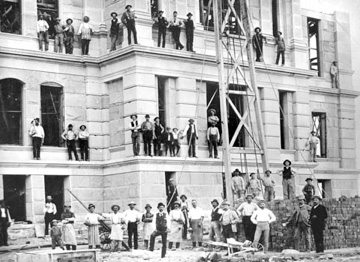 Mead was crucial to the contend and to the eventual adoption of the h2o and irrigation article. Delegates drew from his experience with water and his persuasive abilities to argue for a predictable, expert-driven means of determining rights. Equally Mead biographer James Kluger points out, Mead's ideas nigh h2o spread worldwide and the Wyoming convention gave him his first opportunity to clear his water vision.
Throughout the wide-ranging convention discussions on the state's ownership of water, no mention was made of the rights of the earliest water users—the Native Americans. Though the tribes who had long used the lands that became Wyoming had non been irrigators, they had of grade used the streams as they needed, and the 1868 treaty settling the Eastern Shoshone tribe on a reservation on the Wind River had mentioned h2o among the tribe's resource rights. It was not until almost 100 years after the constitution was adopted that Wyoming's supreme court, later upheld by the U.S. Supreme Court, ruled that, contained of the state's claim in 1890 to own all waters in Wyoming did non apply to the two tribes, Northern Arapaho and Eastern Shoshone, that ultimately settled on the reservation. Rather, the courts ruled, the before treaty with the federal government had given the tribes the all-time priority rights to nearly of the menstruum of the Air current River, if they could put it to use.
Simply even beyond natural resources issues (and except for language exempting Indians from country tax and implying they could non vote considering they were not considered citizens, delegates to the Constitutional Convention fabricated no other mention of the presence of native people within the land'southward borders.
The railroads
Except for their reversal on the coal tonnage tax, the delegates displayed their independence from the influence of the Union Pacific by passing several provisions controlling the style the railroad did business. 1 barred the railroad from by-passing an established community in order to set up a depot nearby. Some other declared railroads common carriers and required them to "bargain impartially with the public," and to keep their rates fair.
When the delegates debated how the master-servant rule would exist applied in Wyoming in lodge that employees would non be barred from collecting for damages resulting from the negligence of another employee, many delegates pointed out that at that place were other corporations also the Spousal relationship Pacific in Wyoming.
Withal, near knew that when provisions were being offered to curb corporate power, the railroad stood to lose the well-nigh. The convention passed a section restricting the legislature from providing any form of financial assist for railroad construction. The delegates similarly debated a proposal that would restrict corporations to i line of business concern. Adopted by the convention, Article 10, Sec. 6 was amended in 1960 to loosen the requirement.
Labor
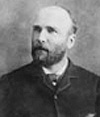 "Chinese labor" was debated extensively — whether or not the constitution ought to ban use of Chinese labor on public works projects. The proposal was introduced by Thomas R. Reid, a Democrat and Union Pacific railway worker from Cheyenne, a native of England who had emigrated to Wyoming equally a young human being from Commonwealth of australia. Some viewed the proposal as a dig at Warren for his actions four years earlier helping protect Chinese miners confronting white miners at Stone Springs, afterward the whites had rioted, killing 28 Chinese. The proposal demonstrated discrimination against Chinese labor de facto: "No person not a citizen of the United States or who has not declared his intention to become such, shall be employed upon or in connection with any state, county or municipal works or employment." The measure passed, with bipartisan back up. (See article Xix, department 1 in the original constitution.)
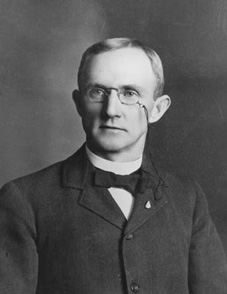 Equally a farther measure of protection to the local workforce, the Constitution instituted the eight-hour twenty-four hours for miners. Another section forbade the importation of "private armies" into the state, clearly intended to prevent employers like the Wedlock Pacific from importing Pinkerton agents to break labor strikes. The measure passed. Just three years later, withal. stockmen raised such a individual regular army to invade Johnson Canton and kill people they labeled rustlers. Two of the stockmen leading the invaders had been delegates to the Constitutional Convention--and had voted for the provision banning private armies.
Religion
The convention also showed skepticism of organized religion, and insisted on separation of church and country. Commodity iii, Sec. 36 asserts "No appropriation shall be fabricated for charitable, industrial, educational or chivalrous purposes to any person, corporation or community non under the absolute control of the state, nor to whatever denominational or sectarian establishment or association." A similar provision in the Declaration of Rights states more straight, "No coin of the state shall ever be given or appropriated to any sectarian or religious society or institution." During debate over requiring an oath for jurors, delegates fabricated information technology articulate that "conventionalities or non-belief in God" ought to be no bar to service. The measures had well-nigh-unanimous and bipartisan support.
Political and sectional divisions
Republicans held a meaning majority in the convention, but the convention did non separate along partisan lines. (U.Due south. Congressional Delegate Carey noted this fact in his oral communication to the Congress advocating admission in February 1890, and the fact is fairly clear from reading the convention proceedings). The real divisions appeared non between parties but between progressives and reformers versus conservatives, and between regions of the state. Though Mead'due south successful proposals on water were part of a progressive policy outlook, another ideas pushed by progressives failed. In improver to Chocolate-brown's efforts at tax of coal, for example, were a proposal from Delegate and University of Wyoming President John Hoyt to create a ceremonious service for land employees. His recommendation was defeated by a substantial margin, however — 21-11. C. D. Clark, who had eloquently opposed the coal tonnage tax, also led opposition to the reform measure out. Brown, Hoyt and Clark were all Republicans.
Sectional differences were peculiarly meaning. Debates over legislative apportionment consumed substantial convention fourth dimension. So did other problems dividing the earlier-populated, southern counties from the newly developing ones in the North. These divisions came up once more over the question of where to locate state institutions. Delegates from the southern counties wanted the convention to ratify the territorial legislatures' designated locations of the already existing capital (Cheyenne), state "insane asylum" (Evanston), university (Laramie), and prison (Rawlins). Northern delegates, believing their region was about to feel population booms, disagreed. The convention struck a compromise. At an election to be held "no sooner than 10 years" after the passage of the Constitution, voters would decide the "permanent" locations of country institutions. During the acting, the institutions would be temporarily housed in the communities previously designated by the territorial legislatures.
In 1904, the ballot for the permanent locations finally was held. Laramie was the sole candidate for the university; Evanston, the state hospital; Rawlins, the state penitentiary. Cheyenne, however, was challenged by several cities for the capital.
The almost serious competitor was Casper, founded in 1888 as a wool shipping signal, simply growing soon after into the center for oil exploration and evolution. It had the advantage of central location over Cheyenne, in the farthermost southeast corner of the state. Centrally located Lander likewise got into the competition.
The ballot result gave Cheyenne more 40 percent of the vote, merely not the required 50 percent plus one, every bit designated in the constitution for permanent location. Consequently, Cheyenne remains, at to the lowest degree constitutionally, the "temporary" uppercase of the state.
The delegates never seriously questioned the declaration, included in the Constitution, that: "The people inhabiting this land do hold and declare that they forever disclaim all right and title to the unappropriated public lands lying within the boundaries thereof…" Notwithstanding, disregarding this linguistic communication, so-called sagebrush rebels over the years accept persisted in enervating that the federal authorities "render" all federal lands to the state.
Education
The delegates debated numerous teaching issues. Most significant was how state lands, held in trust for the do good of the schools, would be sold or leased. Any sale had to be made at or above the appraisal value. All revenues from sale or rent of these lands went into a permanent school fund for the exclusive support of public schools.
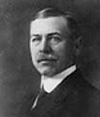 Delegates endorsed a provision barring the country superintendent or the legislature from choosing textbooks for use in schools. Charles Potter's was the only recorded comment explaining the rationale: "I venture to say in that location is no more abuse than that which is caused where the prescribing of textbooks is left to the legislature."
The convention also debated how funding for schools could exist fair to both small and large school districts. With the details left to the legislature, the convention concluded that baseline amounts should exist allocated for each school, and after that, allocation of additional funds would depend on numbers of students. A holding taxation for back up of public schools became a part of the Wyoming Constitution in 1948, and was amended in 1982. A series of Wyoming Supreme Court decisions in the 1990s, demanded equity in school funding statewide, and school-funding fairness connected to dominate legislative sessions in the late 1990s and early on 2000s, more than a century subsequently the convention met.
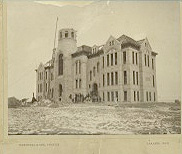 The convention also established a state university — already in existence in the Territory since 1886. The university was to be governed by a lath, and "equally open to students of both sexes, irrespective of race or color…" The Constitution stated that the university would receive enough state funds to proceed higher education "as virtually free as possible."
Finally, on the 25th day of the convention, the delegates voted on adoption of the entire document. The resolution passed 37-0. Later that solar day, 45 of the 55 elected delegates signed the document and adjourned, thereby sending it on the voters for approval.
Gov. Warren called a special ballot for Nov. 5, 1889. The Constitution passed overwhelmingly by a vote of 6,272 in favor to 1,903 against. The margin wasn't a problem; the problem was the total number of voters.
Wyoming Statehood in the Congress
On March 26, 1890, Territorial Delegate to Congress Joseph M. Carey introduced a bill calling for statehood for Wyoming. (It was not the first, but other attempts had not gotten far.) For months before the special election, Carey had been telling colleagues that Wyoming's true population was far above the traditional sixty,000-person statehood threshold. At one point, he estimated it as loftier equally 125,000! Now he had to explicate why, if the population was so great, so few people had voted in the special election.
Population is e'er hard to guess, Carey said when he took to the flooring of the House to advocate passage of the Wyoming Statehood Bill. As for the 60,000 threshold, at least seven states had been admitted with fewer people — and nearly all doubled in population in their first five years of statehood, he said. Wyoming, with "booms and immigration societies," had increased steadily "in population and wealth" since establishment of the Territory, and no dubiety would go along to do so, he said.
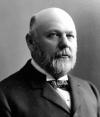 Carey went on to attribute the minor turnout at the special election to lack of involvement, saying "There is but lilliputian of politics in Wyoming. Every year is an off year …" He was confident turnouts would increase once the state was admitted to the Matrimony. Geography was a problem too, he said. Accurate censuses and voter turnouts were both difficult for a population spread over 100,000 foursquare miles.
Curiously, Carey made no mention in his speech of the women'south suffrage article, which some delegates to the Ramble convention believed might have been harmful to gaining statehood. Still, numerous Democrats in the U.Southward. Business firm spoke against access of Wyoming—known to be leaning Republican. In the minority in the House, Democrats knew they'd be unable to block access based on political party affiliation alone—only they could contend confronting statehood for a Republican territory by attacking women'due south suffrage. They made persistent objections to Wyoming'south article vi that granted women equal rights. It virtually worked. The vote was very close. Wyoming statehood finally passed the House of Representatives, 139-127.
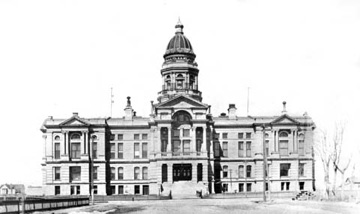 Warren and Carey both bodacious Wyomingites that the bill would pass the Senate inside ten days. Information technology didn't happen that quickly, however, with prominent Senate Democrats continuing to question both the territory'south population and its having immune women the vote. (Women were not granted the vote in U.S. elections until 1920.) Finally, iii months after Business firm passage, Wyoming Statehood passed the Senate by a more than comfortable 29-eighteen margin. President Harrison signed the Statehood Bill on July 10, 1890. Wyoming was the 44th state admitted to the Union.
Aftermath
When the 1890 demography figures for Wyoming became available nearly two years afterward statehood, they showed 62,555 people, co-ordinate to the official count of April 1890, two months afterward Carey's speech communication in the House. Ever since statehood, Wyoming has been concluding or close to terminal amongst united states of america in population. Only Nevada was smaller in the early 20th century; only Alaska, for one census in the eye of the century. Since statehood, authorities officials almost uniformly have called for economic diversification to increase the state's population and diminish the state's dependence on agronomics and natural resources. In the early 21st century, many residents of the country were comfortable with the modest population and opposed promotional drives except for attracting tourists for temporary stays.
Many of the convention delegates, meanwhile. went on to long careers in Wyoming politics, Warren and Carey most prominent among them. Presently later on statehood, the first Wyoming State Legislature sent Carey to the U. S. Senate. In Nov, 1890, Warren easily won the race for land governor, but abandoned that post ii and a one-half months afterwards when the Legislature sent him, as well, to the Senate. Except for a two-year period, he remained in that chamber, and as a power in Wyoming politics, until his expiry in 1929.
In 1894, Warren managed to push his old friend Carey out of the Senate, and a 25-year feud between the two began. In 1910, Carey managed to gain the Democratic nomination for governor, beat the Warren-backed candidate and served for one term. Joseph Carey died in 1923, five years after the Warren machine ended the feud by nominating his son, Robert Carey, for the governorship.
C.D. Clark, the Marriage Pacific Railroad lawyer from Evanston who'd argued successfully against a coal revenue enhancement, won ballot to the U. S. House of Representatives every bit Wyoming'southward simply representative. Clark was after elected to the U. S. Senate; Henry Coffeen, to the U. Southward. House of Representatives.
Other delegates served every bit federal judges and judges on Wyoming'due south Supreme Court and district courts. Hoyt, the UW President and erstwhile Territorial governor, and the consul who drafted much of the education article, returned to the academy presidency after statehood. Before long later on, however, he was fired by the trustees over disagreements over administrative control. 2 delegates, Charles Burdick and William Chaplin, were afterwards elected secretary of land. Delegate DeForest Richards was serving as Wyoming governor at the time of his death in 1902.
Delegates W. C. Irvine, H. C. Teschemacher, and Charles Burritt were implicated on the side of the invaders in the Johnson Canton War in 1892.
The Wyoming Constitution, amended some 75 times since its adoption, remains generally similar to the document drafted in 1889. It is the 11th longest of any state constitution, much longer and more detailed than the United States Constitution and many other state constitutions. Major amendments have been made to articles on judicial pick and on public finance. An amendment was passed in 1974 making it difficult to adopt a country income tax; Wyoming remains one of seven states without an income tax. The offset sales taxation was authorized in 1935.
While gubernatorial power increased with government reorganization in the 1990s, the constitution continues to dilute the power of the chief executive by providing for such entities as thestate land board, which governs the revenue-raising measures and management of land lands and farm loans, and is fabricated up of the governor and the other four statewide elected officials.
Since its adoption in 1889 and Wyoming statehood the following year, at that place has been no call for a second constitutional convention to replace the electric current version. Wyoming's constitution retains the outlines fatigued for it by the drafters in 1889 and accustomed past Congress the next year, when Wyoming became the 44th state.
Resource
Main sources
- The account of the deliberations of the Constitutional Convention is drawn most entirely from the printed proceedings: Periodical and Debates of the Constitutional Convention of the Country of Wyoming (Cheyenne: Daily Sun, Book and Task Printing, 1893).
- References to specific articles passed past the convention are from the convention files, held in the Wyoming State Archives, Cheyenne.
- Delegate Joseph M. Carey'southward remarks to Congress were fabricated during deliberations over the Statehood Nib, H. R. 982, on March 26, 1890, and published in the Congressional Record 21, pp.2672-2683. Carey introduced H. R. 982 on Dec. 18, 1889. See Congressional Record, 21, p. 261.
- No definitive biography exists on Carey. While some of his papers are held in the collections of the Wyoming State Archives and some with family papers in the American Heritage Centre, University of Wyoming, he patently had many of them destroyed prior to his expiry. Biographical information in this article comes from the biography files for Carey in the collections of the American Heritage Center, University of Wyoming.
- For record of the debates on final passage of the Wyoming statehood bill in the U.S. House of Representatives Business firm on March 26, 1890, meet Congressional Record, 21, p. 2712; for passage in the Senate on June 27, 1890, Congressional Record, 21, p. 6589.
Secondary Sources
- Bakken, Gordon M, Rocky Mountain Constitution Making, 1850-1912. (New York: Greenwood Printing, 1986). Fantabulous insights on the constitutional convention issues.
- Bowers, Carol, "Chinese Warren and the Rock Springs Massacre," in Mike Mackey, ed., The Equality State: Essays on Intolerance and Inequality in Wyoming. (Powell: Western History Publications, 2000), pp. 37-62. An insightful view of Territorial Gov. F.Due east. Warren's part in the aftermath of the Rock Springs massacre.
- Erwin, Marie, Wyoming Blue Book I, edited by Virginia Trenholm (Cheyenne: Wyoming Land Archives and Historical Dept., 1974), 541-557. Includes biographical sketches of all delegates, with accompanying photographic portraits.
- Gould, Lewis L., Wyoming: A Political History, 1868-1896. (New Oasis: Yale Univ. Press, 1968) A useful overview of politics of the menstruation.
- Hansen, Matilda, Clear Use of Ability: A Piece of Wyoming Political History (Laramie: Commentary Press, 2003). A recent description of the districting fence.
- Jackson, W. Turrentine. "Assistants of Thomas Moonlight," Register of Wyoming 18 (July 1946), 139-162. A skilful business relationship of Moonlight's stormy term equally territorial governor.
- Keiter, Robert, The Wyoming State Constitution: A Reference Guide. (New York: Greenwood Press, 1993). Good source for the origins of many of the articles in the Wyoming Constitution.
- Kluger, James, Turning on Water with a Shovel (Albuquerque: UNM Press, 1992).
- Morriss, Andrew P, "Wyoming Constitution, Article Eight," in Gordon Bakken, ed., Constabulary in the Western United States. (Norman: Academy of Oklahoma Printing, 2000), 168-169.
- O'Gara, Geoff, What You See in Clear Water: Life on the Wind River Reservation. (New York: A. A. Knopf, 2000). An in-depth business relationship of the h2o-law controversy on Wind River.
- Pisani, Don, "Enterprise and Equity: A Critique of Western H2o Constabulary in the Nineteenth Century," Western Historical Quarterly 18 (1987), 15-37.
- Roberts, Phil, "A History of the Wyoming Sales Tax and How Lawmakers Chose Information technology From Among Severance Taxes, an Income Taxation, Gambling, and a Lottery," Wyoming Law Review 4 (2004), 157-243.
Photo credits
- The photos of Warren, Baxter, Johnston, Morgan, Potter, Reid, Hoyt, Mead, and Carey, the two grouping photos on the capitol steps, and the photos of the capitol under structure and newly completed in 1890 are all from the Wyoming State Athenaeum, with thanks. The photo of Former Main nether structure at the University of Wyoming is from the American Heritage Center at UW, also with thanks.
Source: https://www.wyohistory.org/encyclopedia/wyoming-statehood
0 Response to "Lets Make Wyoming a State Again"
Post a Comment